
Jun 14, 2026 / AI infrastructure
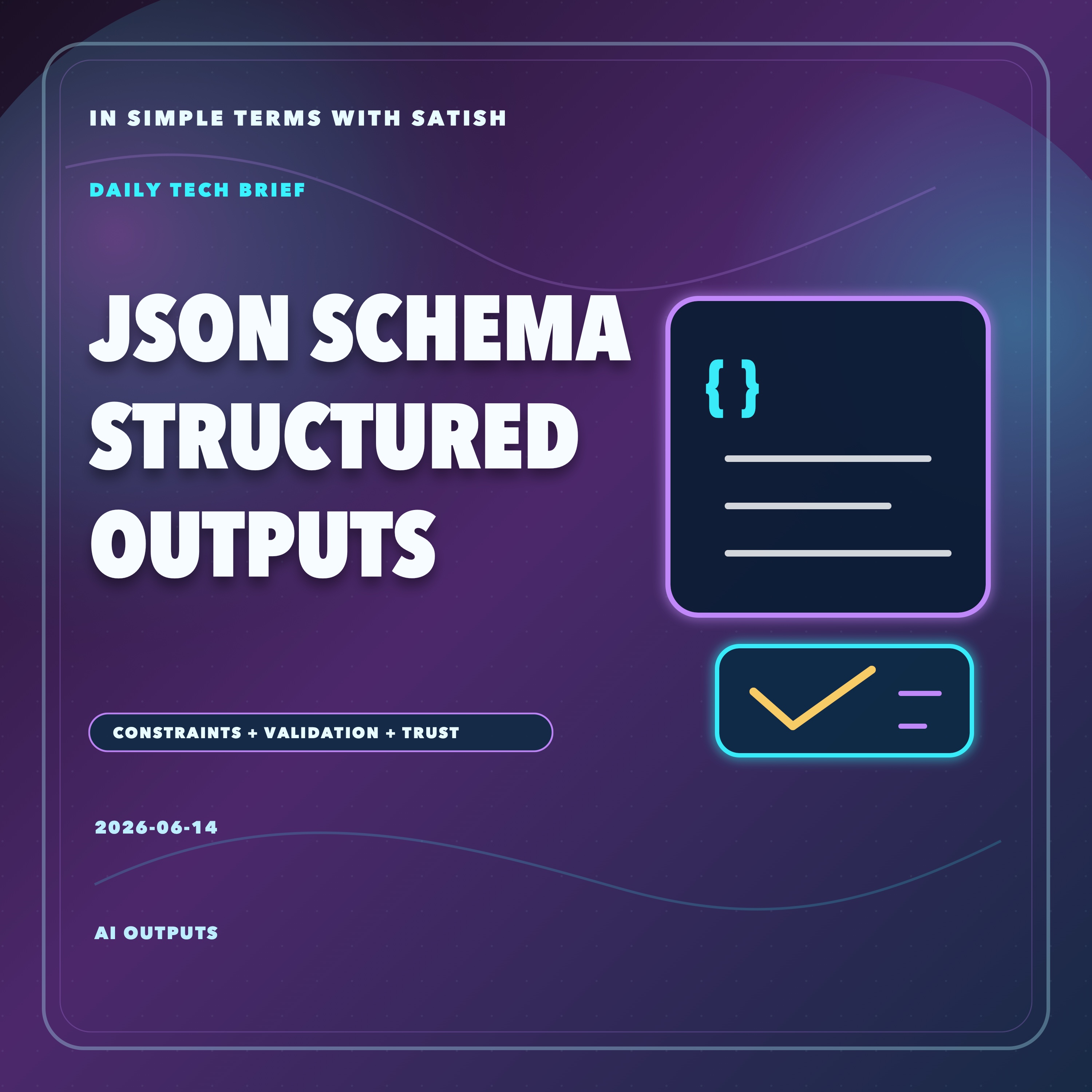
JSON Schema Structured Outputs
Structured outputs are the pattern where an AI model returns data that is shaped to match a schema your software defines in advance.
Continue daily
Take the Daily Tech Brief with you
Get the daily lesson, Quick Check, saved learning habit, and notifications in the iOS or Android app.
Episode Notes
Structured outputs are the pattern where an AI model returns data that is shaped to match a schema your software defines in advance.
In this episode, Satish uses a simple real-life example first, then turns the idea into a practical technical mental model for engineers and curious builders.
In Simple Terms with Satish: daily tech trends explained simply, with enough technical depth for builders.
Production note: This episode uses authorized synthetic narration based on Satish's own voice. The topic, script, and final editorial approval are by Satish.
Full episode transcript 495 words
Hello, and welcome to In Simple Terms with Satish.
Today we are talking about JSON schema structured outputs.
Let us start with the technology first.
Structured outputs are the pattern where an AI model returns data that is shaped to match a schema your software defines in advance.
Now let us use an everyday example.
Imagine you run a workshop and people need to request replacement parts.
If you just say, please write down what you need, most people will give you something useful.
But some will forget the part number.
Some will write the quantity as words instead of numbers.
Some will add extra notes in the wrong place.
A proper request form fixes that.
It tells everyone which boxes exist, which ones are required, what kind of value belongs in each box, and whether extra boxes are allowed at all.
That is the basic idea here.
Now back to the actual technical concept.
For a while, many AI applications asked models to return JSON and treated that as good enough.
That helped, but valid JSON alone does not mean the response matches what the application needs.
The object can still be missing a required field.
It can still use the wrong type.
It can still invent an extra field that the rest of the system does not understand.
That is why schema-based output matters.
The schema defines the contract.
It can say which fields are required.
It can say which values are allowed.
It can define nested objects and lists.
And it can decide whether unknown fields should be rejected.
This matters because AI systems are no longer producing text only for humans to read.
They are also producing data for interfaces, workflows, and tools.
If that data shape is unreliable, the rest of the system becomes messy.
There is another important layer here.
Structured output does not mean the answer is true.
It only means the answer fits the expected shape.
So a perfectly valid object can still contain the wrong product code, the wrong date, or the wrong classification.
That is the catch.
Structure helps the software trust the format.
It does not remove the need to check the meaning.
There is also a design tradeoff.
If the schema is too loose, the model has too many legal ways to answer.
If the schema is too large, the output becomes harder to reason about.
If the schema is too strict in the wrong way, it can make extension or reuse harder.
So builders need to design the smallest useful contract for the specific step.
That is the real takeaway.
As AI systems become more connected to apps and tools, the important shift is not only asking for cleaner JSON.
It is defining a better contract between the model and the rest of the software.
If this helped you understand the topic in simple terms, follow or subscribe to In Simple Terms with Satish. I will see you in the next episode.
Quick Check
-
What is the core idea behind JSON Schema Structured Outputs?
Structured outputs are the pattern where an AI model returns data that is shaped to match a schema your software defines in advance.
-
Why does JSON Schema Structured Outputs matter?
Imagine you run a workshop and people need to request replacement parts.
-
Which plain-English example helped explain the topic?
Imagine you run a workshop and people need to request replacement parts. If you just say, please write down what you need, most people will give you something useful.
-
Which term is most connected to this lesson?
Key terms for this lesson include JSON, Schema, Structured, Outputs, infrastructure, properties.
-
What is the practical takeaway?
That is the real takeaway. As AI systems become more connected to apps and tools, the important shift is not only asking for cleaner JSON.
Continue learning
Related Daily Tech Brief episodes
Explore another explanation from AI infrastructure or continue through the latest technology systems.

How The Internet Travels Under The Ocean
When you send a WhatsApp overseas, join a video call with a team in another country, upload a photo to the cloud, or open a website hosted far away, your data may be crossing an ocean.
Vibe Coding: Why Everyone Is Talking To Their Code Editor
Today we are talking about vibe coding, the idea that you can build software by talking to an AI coding tool instead of typing every line yourself.
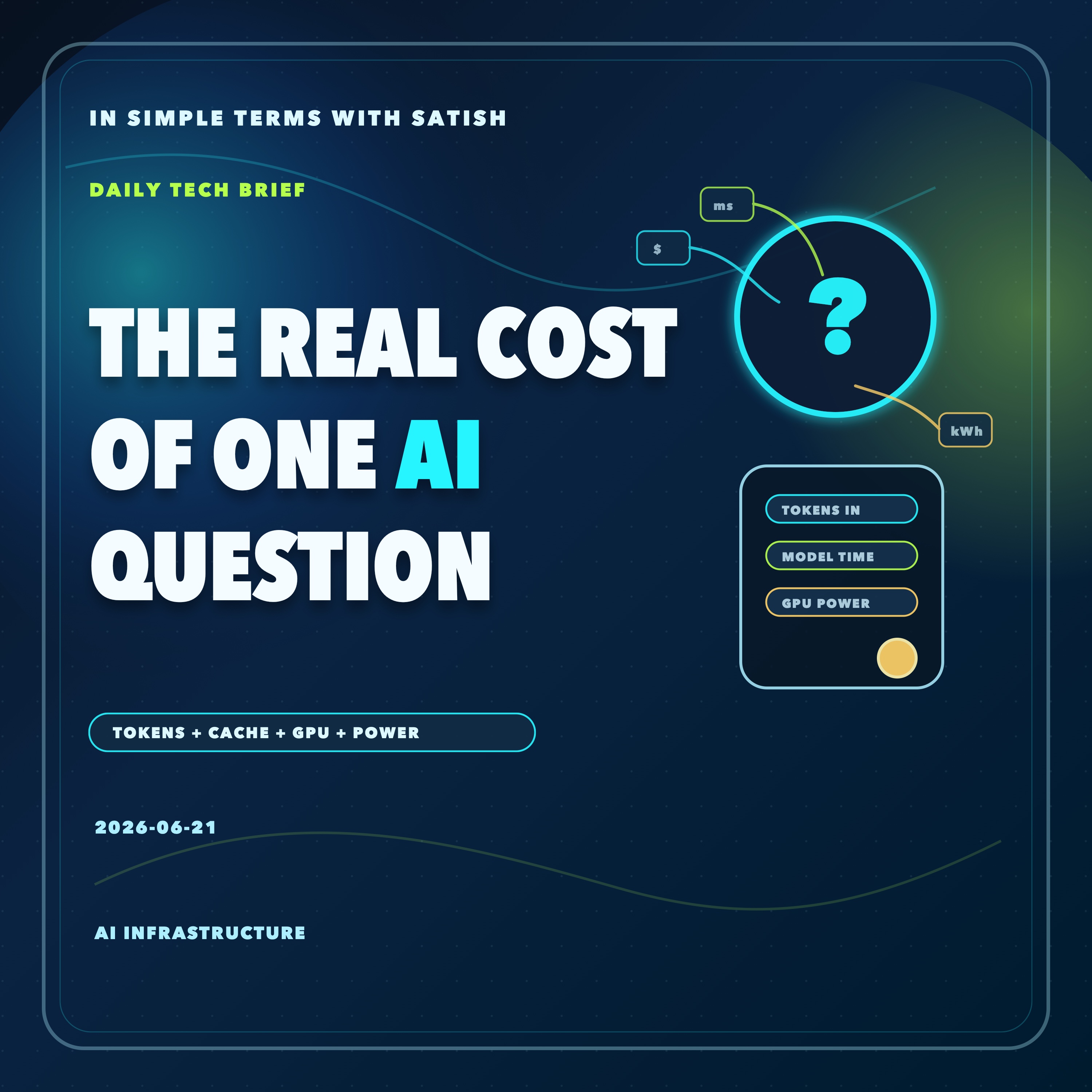
The Real Cost Of Asking AI One Question
Today we are talking about large language model inference, and the real cost of asking AI one question.