March 23, 2020

AEM CRXDE – Understanding the Folder Structure of the Repository!

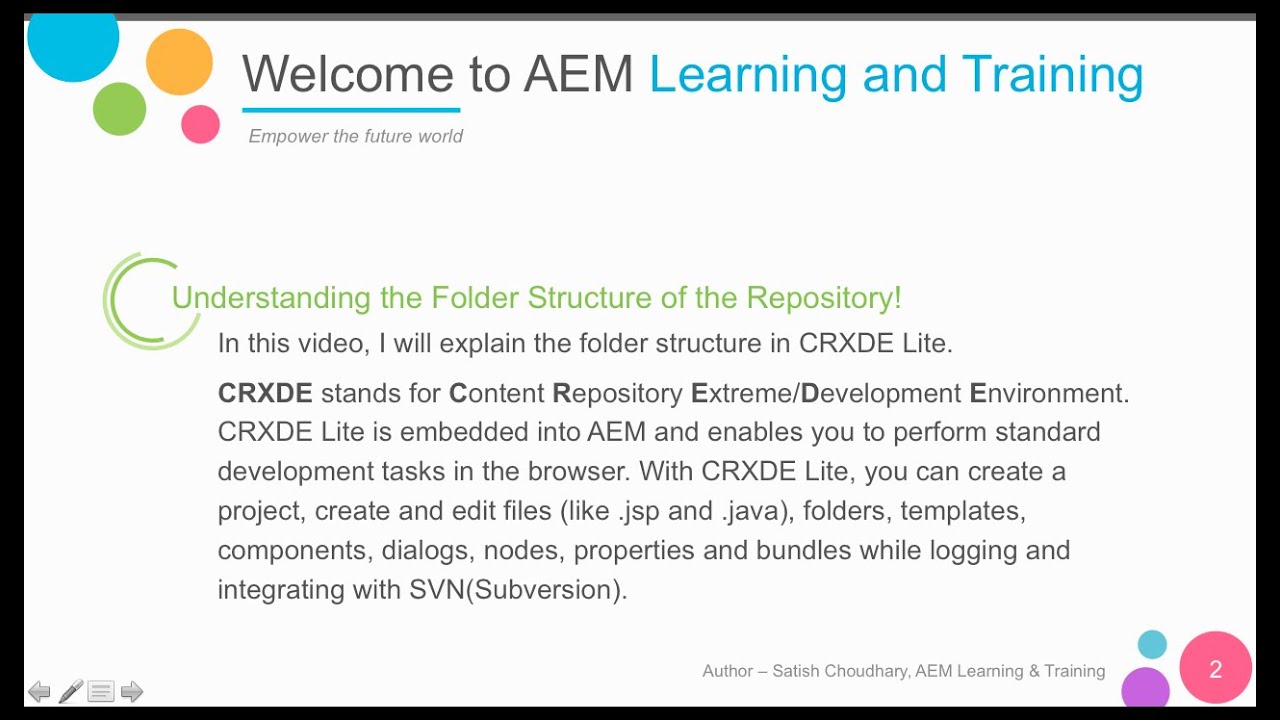
In this video, I will explain the folder structure in CRXDE Lite. CRXDE stands for Content Repository Extreme/Development Environment. CRXDE Lite is embedded into AEM and enables you to perform standard development tasks in…

Episode cover for AEM CRXDE – Understanding the Folder Structure of the Repository!

In Simple Terms

The useful idea from this episode.

In this video, I will explain the folder structure in CRXDE Lite. CRXDE stands for Content Repository Extreme/Development Environment. CRXDE Lite is embedded into AEM and enables you to perform standard development tasks in…

  • Watch or listen for the concept first, then connect it to the practical decision.
  • Use the notes below as the written companion when you want to revisit the explanation.

AEM Companion Path

Take this episode into the AEM workspace.

The AEM series is designed as a loop: understand the concept, try the check, then return to the hub for the next layer.

About In Simple Terms

Complex technology concepts explained calmly and practically.

In Simple Terms is where I practice explaining the systems people keep asking about: AI, AEM, blockchain, architecture, platforms, and the decisions behind them.

Episode Notes

What this episode covers.

In this video, I will explain the folder structure in CRXDE Lite.

CRXDE stands for Content Repository Extreme/Development Environment. CRXDE Lite is embedded into AEM and enables you to perform standard development tasks in the browser. With CRXDE Lite, you can create a project, create and edit files (like .jsp and .java), folders, templates, components, dialogs, nodes, properties and bundles while logging and integrating with SVN(Subversion).


Written companion

CRXDE and the Folder Structure of the AEM Repository

Adobe Experience Manager (AEM) can feel overwhelming at first — not because of complexity, but because of how much is hidden behind structure. CRXDE and the AEM repository form the backbone of how content, components, and configurations are stored and accessed. Understanding this structure...